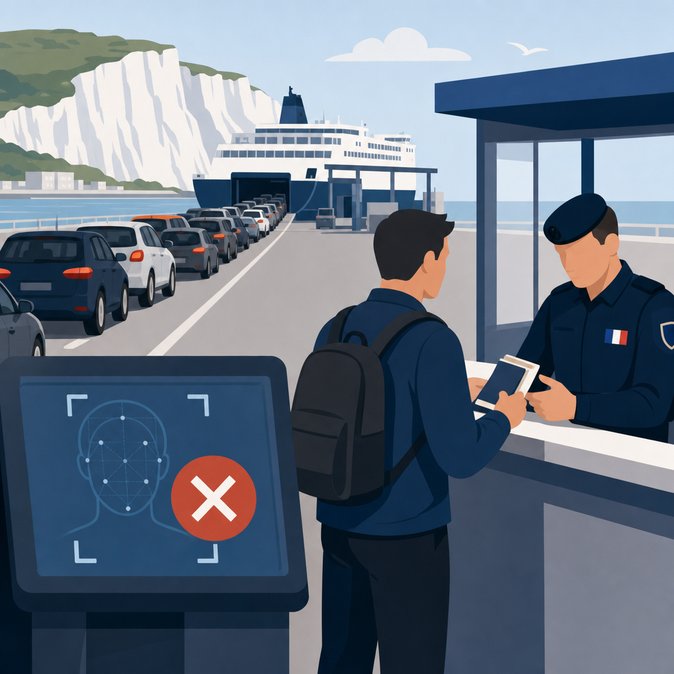
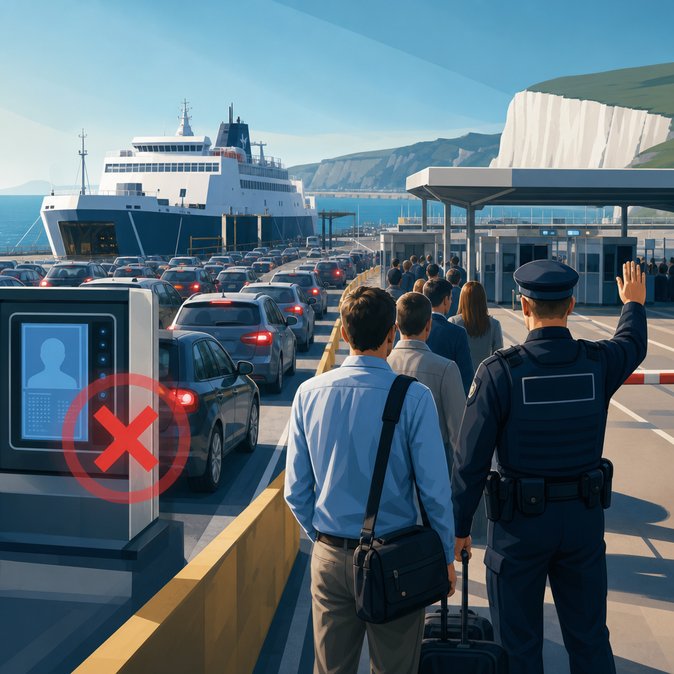
Bank-holiday getaway plans were thrown into confusion on Saturday, 23 May, when French Police Aux Frontières (PAF) halted use of the EU’s new Entry-Exit System (EES) at the Port of Dover. For the past month all non-EU travellers, including British citizens, have had to complete biometric registration – fingerprints and a facial image – before leaving the UK for France. On the hottest day of the year so far, the extra processing tipped already-busy booths over the edge. Queues of cars stretched for miles and some drivers told the BBC they waited six hours for a 90-minute crossing. Port of Dover chief executive Doug Bannister said the first real test of EES “simply wasn’t fast enough,” despite months of joint planning with UK and French authorities.
![EU Entry-Exit System paused at Dover after holiday weekend gridlock]()
For travellers wanting to stay ahead of changing border procedures, VisaHQ offers a convenient UK portal (https://www.visahq.com/united-kingdom/) that breaks down current EU entry rules, provides alerts on systems such as the EES, and helps users secure any additional visas they might need for onward journeys. The service can be a useful back-up for holidaymakers and business passengers alike who prefer to sort paperwork before reaching the port.
Shortly after lunchtime, French officials suspended biometric capture and reverted to traditional passport stamping. Traffic flow improved almost immediately, but the incident has renewed industry warnings that the EES – due to become mandatory at all fixed links later this year – still lacks robust contingency plans for peak volumes. Ferry operators carried more than 8,000 cars on Saturday alone; Eurotunnel and Eurostar will face the same bottleneck when they switch from pilot to full use of EES this summer. Business-travel groups said the stoppage underscores the operational risk the EES poses to just-in-time supply chains and short-notice client visits between the UK and continental Europe. Many companies have not yet budgeted for longer door-to-door journey times or ensured staff understand the one-off registration requirement. While Saturday’s decision was discretionary, EU regulations allow border guards to waive EES if “exceptional circumstances” threaten safety or public order. Port executives want a formal protocol so they can trigger a pause quickly during future peaks such as the late-May half-term escape and July holiday rush. For now, travellers are being urged to build in at least two extra hours on Dover–Calais sailings and to have passports ready for manual stamping should the technology be switched off again.
For travellers wanting to stay ahead of changing border procedures, VisaHQ offers a convenient UK portal (https://www.visahq.com/united-kingdom/) that breaks down current EU entry rules, provides alerts on systems such as the EES, and helps users secure any additional visas they might need for onward journeys. The service can be a useful back-up for holidaymakers and business passengers alike who prefer to sort paperwork before reaching the port.
Shortly after lunchtime, French officials suspended biometric capture and reverted to traditional passport stamping. Traffic flow improved almost immediately, but the incident has renewed industry warnings that the EES – due to become mandatory at all fixed links later this year – still lacks robust contingency plans for peak volumes. Ferry operators carried more than 8,000 cars on Saturday alone; Eurotunnel and Eurostar will face the same bottleneck when they switch from pilot to full use of EES this summer. Business-travel groups said the stoppage underscores the operational risk the EES poses to just-in-time supply chains and short-notice client visits between the UK and continental Europe. Many companies have not yet budgeted for longer door-to-door journey times or ensured staff understand the one-off registration requirement. While Saturday’s decision was discretionary, EU regulations allow border guards to waive EES if “exceptional circumstances” threaten safety or public order. Port executives want a formal protocol so they can trigger a pause quickly during future peaks such as the late-May half-term escape and July holiday rush. For now, travellers are being urged to build in at least two extra hours on Dover–Calais sailings and to have passports ready for manual stamping should the technology be switched off again.