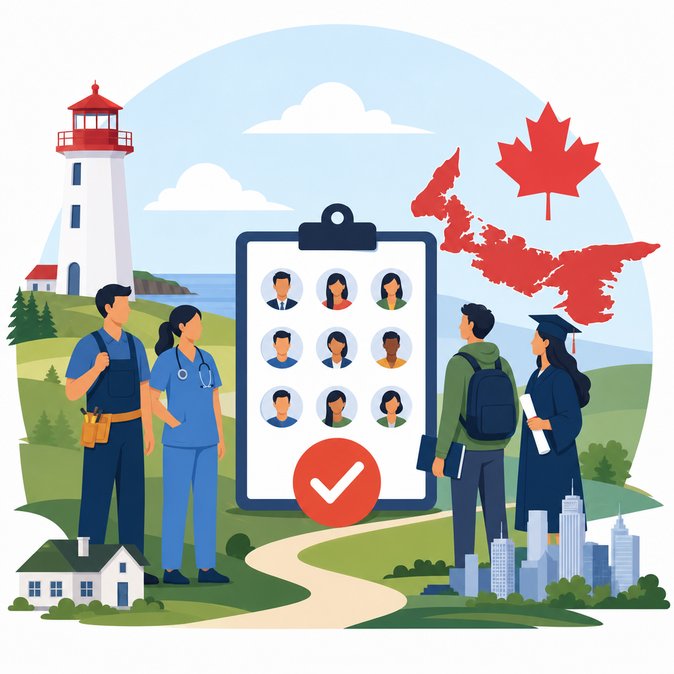
The Province of Prince Edward Island (PEI) issued 114 Invitations to Apply (ITAs) under its Provincial Nominee Program (PEI PNP) on 21 May, according to details published late on 22 May by Toronto-based consultancy Gunness & Associates. This fifth draw of 2026 targeted three familiar groups: workers already employed by PEI businesses, recent international graduates from local institutions and candidates aligned with priority occupations in agriculture, health care and early childhood education.
![Prince Edward Island invites 114 candidates in fifth PNP draw of 2026, signalling continued focus on skilled talent retention]()
For applicants looking to navigate PEI’s PNP steps and the subsequent federal processes, VisaHQ’s digital platform (https://www.visahq.com/canada/) can streamline everything from document collection to deadline reminders. Its advisors track shifting Canadian immigration rules and flag paperwork gaps early, helping both employers and candidates avoid costly delays.
PEI’s strategy mirrors other small-province approaches: leverage immigration to offset demographic pressures and skills shortages while giving international students a pathway to permanence. So far this year the island has invited 477 candidates—on pace to match or exceed 2025’s total of 1,070 nominees. The province has also confirmed its next draw for 18 June, giving prospective applicants a clear planning horizon. For employers, PEI PNP remains a vital supplement to federal Express Entry because it allows the province to set occupation-specific criteria and issue work-permit support letters that bypass Labour Market Impact Assessments (LMIAs). Local seafood processors, agribusinesses and tourism operators often rely on the PNP to stabilise their seasonal workforce. International graduates of the University of Prince Edward Island and Holland College benefit as well: they can qualify for nomination with lower language scores and without minimum work-experience thresholds if they have in-province job offers. That retention lever is increasingly important as Atlantic institutions compete for a shrinking pool of foreign students amid the federal study-permit cap. Relocation managers should note that PEI generally processes PNP applications in eight to ten weeks once a candidate submits a complete file. However, federal permanent-residence processing still averages six to eight months. Candidates nominated in May can realistically plan to land as permanent residents in early 2027—useful lead time for employers aligning housing, schooling and spousal employment support.

For applicants looking to navigate PEI’s PNP steps and the subsequent federal processes, VisaHQ’s digital platform (https://www.visahq.com/canada/) can streamline everything from document collection to deadline reminders. Its advisors track shifting Canadian immigration rules and flag paperwork gaps early, helping both employers and candidates avoid costly delays.
PEI’s strategy mirrors other small-province approaches: leverage immigration to offset demographic pressures and skills shortages while giving international students a pathway to permanence. So far this year the island has invited 477 candidates—on pace to match or exceed 2025’s total of 1,070 nominees. The province has also confirmed its next draw for 18 June, giving prospective applicants a clear planning horizon. For employers, PEI PNP remains a vital supplement to federal Express Entry because it allows the province to set occupation-specific criteria and issue work-permit support letters that bypass Labour Market Impact Assessments (LMIAs). Local seafood processors, agribusinesses and tourism operators often rely on the PNP to stabilise their seasonal workforce. International graduates of the University of Prince Edward Island and Holland College benefit as well: they can qualify for nomination with lower language scores and without minimum work-experience thresholds if they have in-province job offers. That retention lever is increasingly important as Atlantic institutions compete for a shrinking pool of foreign students amid the federal study-permit cap. Relocation managers should note that PEI generally processes PNP applications in eight to ten weeks once a candidate submits a complete file. However, federal permanent-residence processing still averages six to eight months. Candidates nominated in May can realistically plan to land as permanent residents in early 2027—useful lead time for employers aligning housing, schooling and spousal employment support.