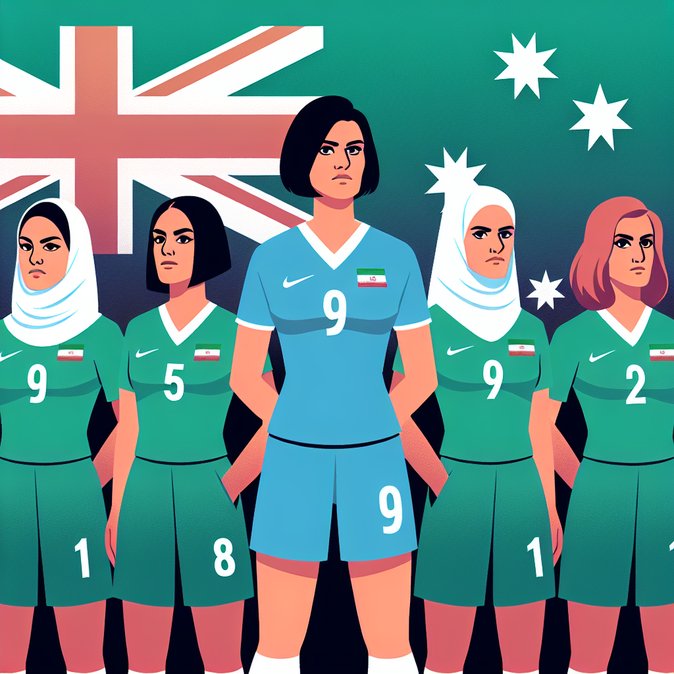
Home Affairs Minister Tony Burke confirmed on 10 March 2026 that five members of Iran’s women’s national soccer team have been granted humanitarian visas following their silent protest at the AFC Women’s Asian Cup in Queensland. The players, who refused to sing Iran’s national anthem on 8 March, claimed they would face persecution and possible treason charges if forced to return. ABC cameras captured the athletes flashing an SOS hand signal from their team bus, galvanising public pressure on Canberra to act. The asylum move places Australia squarely in Tehran’s cross-hairs. Iranian state media labelled the players “traitors”, and the Iranian Football Federation accused Australia of “hostage-taking”. Diplomatic sources say Tehran has threatened to boycott future Asian Cup fixtures scheduled in Sydney and Melbourne. The Department of Foreign Affairs and Trade (DFAT) has summoned Iran’s chargé d’affaires, insisting the players sought protection voluntarily.
![Australia Grants Asylum to Iranian Women’s Soccer Players After Anthem Protest at Women’s Asian Cup]()
VisaHQ can play a crucial back-office role in such flashpoint situations. By offering up-to-the-minute advice, document vetting and accelerated filing through its Australian portal (https://www.visahq.com/australia/), the company helps athletes, employers and NGOs navigate humanitarian or emergency visa applications while minimising red tape.
For Australia’s mobility ecosystem, the case highlights the speed with which sporting events can morph into humanitarian emergencies. Corporations that sponsor major tournaments should review crisis-management protocols covering athlete activism, sudden visa requests and potential diplomatic fallout. With geopolitical tensions high due to the concurrent Gulf conflict, the government processed the protection visas in 48 hours – a fraction of the usual six-month median – signalling a willingness to fast-track high-profile humanitarian cases. Practical implications for employers include heightened media interest in staff of Iranian origin and possible visa-processing scrutiny for travellers holding Iranian passports. Mobility teams should anticipate delays for security-related character checks and prepare briefing notes for employees transiting via Tehran or Doha.
VisaHQ can play a crucial back-office role in such flashpoint situations. By offering up-to-the-minute advice, document vetting and accelerated filing through its Australian portal (https://www.visahq.com/australia/), the company helps athletes, employers and NGOs navigate humanitarian or emergency visa applications while minimising red tape.
For Australia’s mobility ecosystem, the case highlights the speed with which sporting events can morph into humanitarian emergencies. Corporations that sponsor major tournaments should review crisis-management protocols covering athlete activism, sudden visa requests and potential diplomatic fallout. With geopolitical tensions high due to the concurrent Gulf conflict, the government processed the protection visas in 48 hours – a fraction of the usual six-month median – signalling a willingness to fast-track high-profile humanitarian cases. Practical implications for employers include heightened media interest in staff of Iranian origin and possible visa-processing scrutiny for travellers holding Iranian passports. Mobility teams should anticipate delays for security-related character checks and prepare briefing notes for employees transiting via Tehran or Doha.
More From Australia
View all
Australia Tightens Training Visa 407: Sponsorship and Nomination Must Be Approved Before Lodgement

‘Arrival Control Determination’ Bill Clears Second Reading, Giving Canberra Emergency Powers to Bar Offshore Travellers