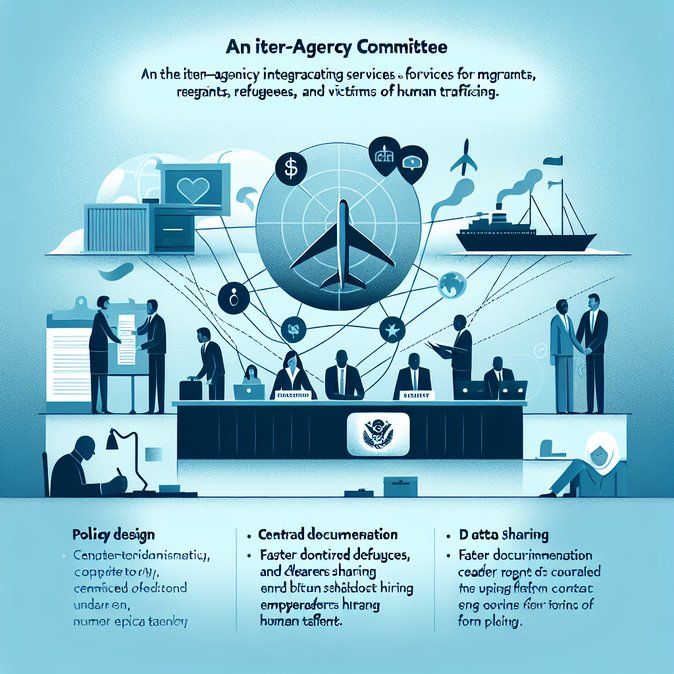
The state of Ceará in Brazil’s Northeast formally swore in the members of its new Inter-Institutional Committee for Attention to Migrants, Refugees and Combating Human Trafficking (CEMIGTRAP) on 5 March, with the news released to the public on 6 March 2026. The body brings together ten state secretariats—including Tourism, Education, Labour and Public Security—alongside civil-society observers to streamline assistance programmes, documentation drives and anti-trafficking operations.
![Ceará installs inter-institutional committee to coordinate migrant and refugee policy]()
For individual migrants who need practical help with visas and legal entry documents before taking advantage of Ceará’s support network, services like VisaHQ can simplify the process. The platform offers up-to-date requirements, digital application tools and customer support for Brazilian visas—see https://www.visahq.com/brazil/—ensuring newcomers and the companies that hire them spend less time on paperwork and more time settling in.
Although migration policy is largely federal, states like Ceará host growing numbers of Venezuelans and Haitians arriving overland or by internal relocation. Until now, agencies worked in silos, leading to duplicated social-service referrals and gaps in language training. CEMIGTRAP will create a shared database of cases and coordinate emergency shelters with the federal humanitarian post at Fortaleza airport. The committee’s inaugural task is to draft a two-year action plan that includes regularisation workshops in interior municipalities, Portuguese-language classes for school-age children and awareness campaigns targeting recruiters involved in forced labour. A public call on 9 March will select ten NGO representatives to sit on the panel, guaranteeing community oversight. For employers the consolidation matters: international companies setting up operations in Ceará’s Pecém Export Processing Zone will have a single point of contact when hiring refugees under Brazil’s labour-inclusion quotas. Human-resources teams are expected to benefit from faster issuance of work cards (Carteira de Trabalho) and coordinated anti-fraud document checks. Ceará joins São Paulo, Roraima and Rio Grande do Sul in establishing dedicated migration councils, a trend observers say reflects Brazil’s shift toward sub-national management of mobility challenges.

For individual migrants who need practical help with visas and legal entry documents before taking advantage of Ceará’s support network, services like VisaHQ can simplify the process. The platform offers up-to-date requirements, digital application tools and customer support for Brazilian visas—see https://www.visahq.com/brazil/—ensuring newcomers and the companies that hire them spend less time on paperwork and more time settling in.
Although migration policy is largely federal, states like Ceará host growing numbers of Venezuelans and Haitians arriving overland or by internal relocation. Until now, agencies worked in silos, leading to duplicated social-service referrals and gaps in language training. CEMIGTRAP will create a shared database of cases and coordinate emergency shelters with the federal humanitarian post at Fortaleza airport. The committee’s inaugural task is to draft a two-year action plan that includes regularisation workshops in interior municipalities, Portuguese-language classes for school-age children and awareness campaigns targeting recruiters involved in forced labour. A public call on 9 March will select ten NGO representatives to sit on the panel, guaranteeing community oversight. For employers the consolidation matters: international companies setting up operations in Ceará’s Pecém Export Processing Zone will have a single point of contact when hiring refugees under Brazil’s labour-inclusion quotas. Human-resources teams are expected to benefit from faster issuance of work cards (Carteira de Trabalho) and coordinated anti-fraud document checks. Ceará joins São Paulo, Roraima and Rio Grande do Sul in establishing dedicated migration councils, a trend observers say reflects Brazil’s shift toward sub-national management of mobility challenges.