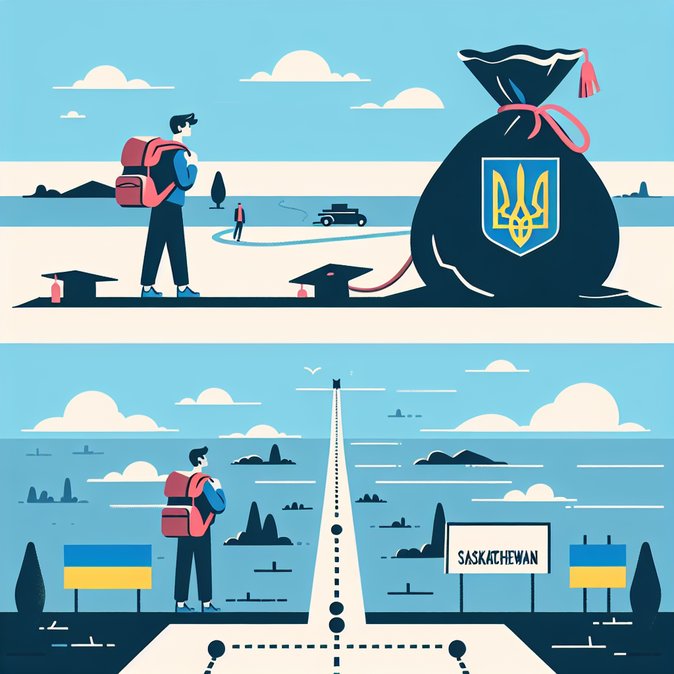
The Government of Saskatchewan announced on March 3, 2026 that post-secondary students who arrived under the Canada-Ukraine Authorization for Emergency Travel (CUAET) will continue to pay domestic, rather than international, tuition fees until at least 31 March 2030. First introduced in 2023 as a war-time humanitarian measure, the programme had been set to expire next spring. Advanced Education Minister Ken Cheveldayoff said the four-year extension would give displaced Ukrainians “the stability, opportunity and encouragement they need to complete their education and build lives in our province.” Roughly 700 Ukrainian learners have benefited so far, saving an average C$12,000 per year compared with standard international fees.
![Saskatchewan extends domestic-tuition relief for Ukrainian students under CUAET until 2030]()
For those CUAET students—and any newcomers—who may still need help with visa renewals, travel documentation or future study permits, VisaHQ provides an easy-to-use online portal and personalised support; more details are available at https://www.visahq.com/canada/
Unlike most provinces, which offer only targeted bursaries, Saskatchewan embeds the relief directly in institutional fee schedules, meaning universities and colleges invoice CUAET students at the lower domestic rate and receive a provincial top-up to cover lost revenue. Officials confirmed that the programme’s C$5 million annual budget will now be carried in the province’s estimates through 2029-30, with a review due in 2029. For employers, the extension preserves a key pipeline of work-ready graduates eligible for open Post-Graduation Work Permits (PGWPs). Many CUAET students already hold open work authorisation and can work unlimited hours during studies until 31 December 2026 under federal rules. Human-resources teams in agriculture, health care and construction—sectors facing acute shortages in Saskatchewan’s labour market—are expected to benefit. Immigration lawyers welcomed the news but urged the federal government to clarify whether time spent in full-time study under domestic tuition will continue to count towards permanent-residence pathways such as the Saskatchewan Immigrant Nominee Program and the Canadian Experience Class, warning that inconsistent interpretations could undermine the policy’s long-term intent.

For those CUAET students—and any newcomers—who may still need help with visa renewals, travel documentation or future study permits, VisaHQ provides an easy-to-use online portal and personalised support; more details are available at https://www.visahq.com/canada/
Unlike most provinces, which offer only targeted bursaries, Saskatchewan embeds the relief directly in institutional fee schedules, meaning universities and colleges invoice CUAET students at the lower domestic rate and receive a provincial top-up to cover lost revenue. Officials confirmed that the programme’s C$5 million annual budget will now be carried in the province’s estimates through 2029-30, with a review due in 2029. For employers, the extension preserves a key pipeline of work-ready graduates eligible for open Post-Graduation Work Permits (PGWPs). Many CUAET students already hold open work authorisation and can work unlimited hours during studies until 31 December 2026 under federal rules. Human-resources teams in agriculture, health care and construction—sectors facing acute shortages in Saskatchewan’s labour market—are expected to benefit. Immigration lawyers welcomed the news but urged the federal government to clarify whether time spent in full-time study under domestic tuition will continue to count towards permanent-residence pathways such as the Saskatchewan Immigrant Nominee Program and the Canadian Experience Class, warning that inconsistent interpretations could undermine the policy’s long-term intent.