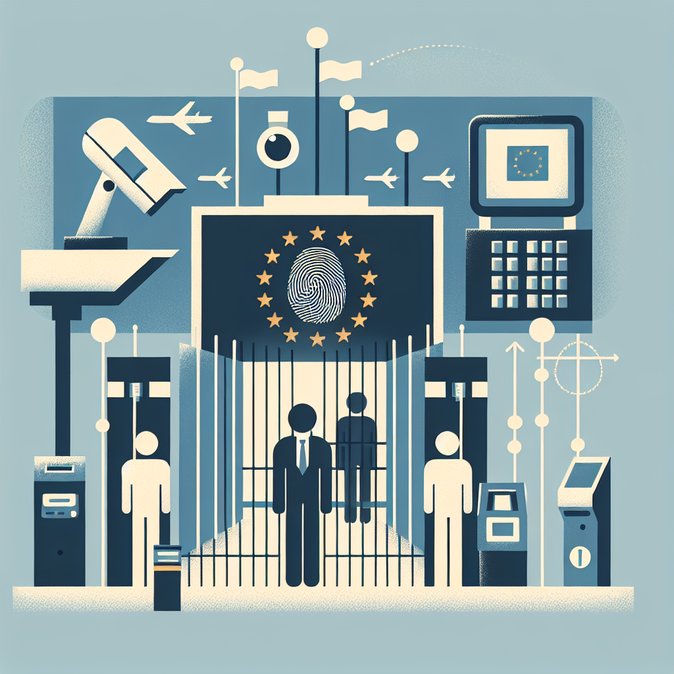
At the regular federal press conference on 20 February 2026, Interior-Ministry spokesman Florian Zanetti confirmed that temporary controls at all German land borders will remain in force for another six-month period beyond 15 March. The extension—formally notified to the European Commission—means passport and vehicle spot checks will continue until at least 15 September 2026 at crossings with Poland, Czechia, Austria, Switzerland, France, the Benelux countries and Denmark.
![Berlin Extends Internal Border Checks to 15 September 2026 Amid Migration Debate]()
For travellers who want extra reassurance that they are carrying the correct papers during this extended control period, VisaHQ can help streamline the process. Its Germany portal (https://www.visahq.com/germany/) offers real-time guidance on Schengen entry rules, visa options and documentation checklists, and can even arrange courier handling of passports—support that is especially useful for corporate mobility teams navigating shifting border requirements.
Germany first re-introduced blanket internal controls in September 2024 after a spike in irregular entries via the Balkan route. Although EU rules normally limit such checks to two years, Berlin argues that persistent secondary movements, smuggling networks and the upcoming Entry/Exit System (EES) justify the prolongation. Since autumn 2024 federal police have turned back 47,000 would-be entrants and arrested nearly 1,900 smugglers; asylum applications fell by roughly one-third in 2025. Critics—including the Brandenburg finance minister and the Police Union—say manpower should be redeployed to stations and urban hubs rather than rural border posts. Business lobbies warn that just-in-time supply chains remain vulnerable to unannounced inspections that can delay lorries for hours. Yet the government insists disruption is minimal: "We continually adjust deployments according to risk assessments," Zanetti told reporters, adding that commercial traffic receives priority lanes. For mobility managers the message is clear: corporate travellers and assignees should continue to carry both passports/ID cards and proof of residence when crossing internal Schengen borders by car or rail. Coach operators must upload passenger lists 24 hours in advance, while haulage firms are advised to pad schedules by at least 90 minutes on eastern and southern corridors. Whether the controls survive beyond September will depend on migration flows this summer and the smooth roll-out of EES biometric gates. The Interior Ministry says it will reassess the measure in late August once real-time overstayer data from EES become available.

For travellers who want extra reassurance that they are carrying the correct papers during this extended control period, VisaHQ can help streamline the process. Its Germany portal (https://www.visahq.com/germany/) offers real-time guidance on Schengen entry rules, visa options and documentation checklists, and can even arrange courier handling of passports—support that is especially useful for corporate mobility teams navigating shifting border requirements.
Germany first re-introduced blanket internal controls in September 2024 after a spike in irregular entries via the Balkan route. Although EU rules normally limit such checks to two years, Berlin argues that persistent secondary movements, smuggling networks and the upcoming Entry/Exit System (EES) justify the prolongation. Since autumn 2024 federal police have turned back 47,000 would-be entrants and arrested nearly 1,900 smugglers; asylum applications fell by roughly one-third in 2025. Critics—including the Brandenburg finance minister and the Police Union—say manpower should be redeployed to stations and urban hubs rather than rural border posts. Business lobbies warn that just-in-time supply chains remain vulnerable to unannounced inspections that can delay lorries for hours. Yet the government insists disruption is minimal: "We continually adjust deployments according to risk assessments," Zanetti told reporters, adding that commercial traffic receives priority lanes. For mobility managers the message is clear: corporate travellers and assignees should continue to carry both passports/ID cards and proof of residence when crossing internal Schengen borders by car or rail. Coach operators must upload passenger lists 24 hours in advance, while haulage firms are advised to pad schedules by at least 90 minutes on eastern and southern corridors. Whether the controls survive beyond September will depend on migration flows this summer and the smooth roll-out of EES biometric gates. The Interior Ministry says it will reassess the measure in late August once real-time overstayer data from EES become available.